Explained for Students: 2025 Nobel Prize in Medicine — How Our Body Stops the Immune System from Attacking Itself
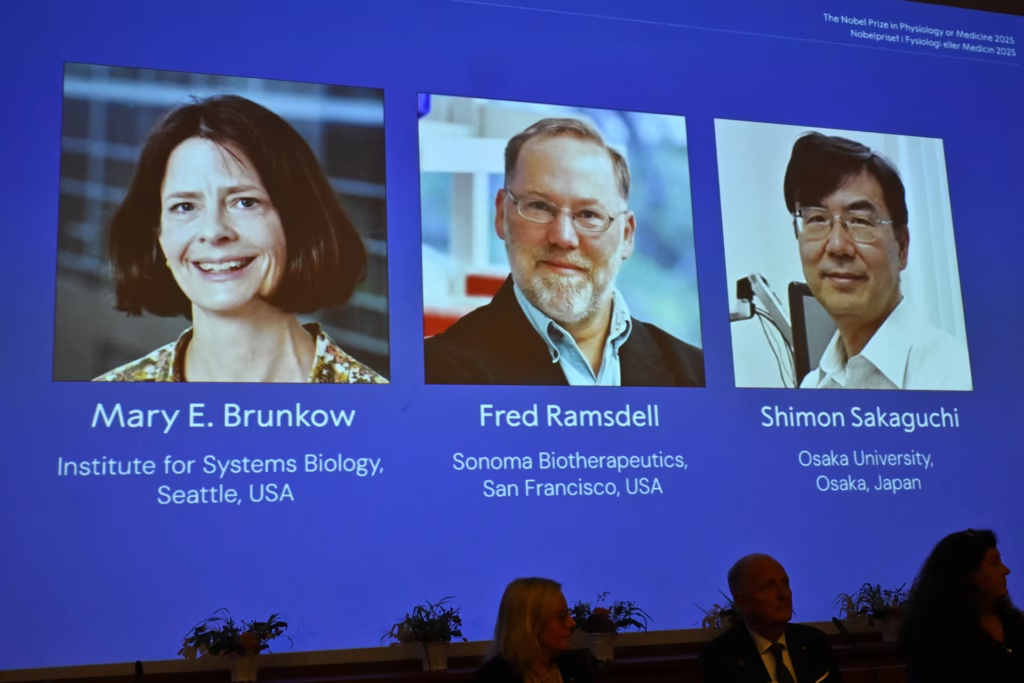
In October 2025, the Nobel Prize in Physiology or Medicine was awarded to Mary E. Brunkow, Fred Ramsdell, and Shimon Sakaguchi. Their work revealed an essential safeguard in our immune system: how it avoids attacking our own body. Their discoveries concern peripheral immune tolerance.
What did they discover?
Our immune system works to protect us from germs — bacteria, viruses, or other harmful invaders. But this protection has a challenge: how does the body make sure the immune system doesn’t attack its own cells by mistake?
For a long time, scientists knew about central tolerance — the process in the thymus (an organ above the heart) where immune cells that strongly react to the body’s own tissues are eliminated. But some self-reacting immune cells still escape into circulation. What then keeps them in check outside of the thymus?
This is where the laureates’ work becomes important. They discovered a type of cell called regulatory T cells, often called T-regs. These are like immune system “guards” whose job is to prevent harmful immune attacks on our own healthy tissues.
Sakaguchi first identified these regulatory T cells in 1995. Later, Brunkow and Ramsdell discovered that a specific gene, called FOXP3, is critical for these regulatory T cells to work properly. If FOXP3 gets mutated, the regulatory T cells don’t function well, causing autoimmune diseases.
In simple terms:
- The body has defenders (immune cells) that fight invaders.
- But it also has regulators (T-regs) to ensure those defenders don’t mistakenly attack “self.”
- FOXP3 is like the instruction manual for these regulators.
Why does this matter?
Preventing Autoimmune Diseases
When the immune system attacks its own cells, we get autoimmune diseases like Type 1 diabetes, rheumatoid arthritis, lupus, etc. Understanding how regulatory T cells work opens the door to treatments that could enhance this “braking system” to prevent or reduce these diseases.
Organ Transplants
After a transplant, the recipient’s immune system may reject the new organ, seeing it as foreign. If we can control or boost regulatory T cells, we might reduce rejection and improve transplant success.
Cancer Therapy
In many cancers, tumor cells hide from the immune system. In some cases, regulatory T cells may help tumors hide by suppressing immune attacks. Scientists are exploring ways to “dial down” T-regs in cancer so the immune system can act more aggressively against tumors.
New Medical Strategies
Thanks to these discoveries, over 200 clinical trials are underway globally to develop therapies based on regulatory T cells and the FOXP3 pathway.
In short
The 2025 Nobel Prize in Medicine honors a discovery that helps us understand a crucial balance in our body: how to defend ourselves without harming ourselves. The work of Brunkow, Ramsdell, and Sakaguchi shows us that our immune system not only needs soldiers to fight disease, but also guardians to ensure it doesn’t turn into a rogue force. Their findings are propelling us into a future where diseases like autoimmunity, transplant rejection, and cancer may be treated more smartly by fine-tuning our internal immune controls.